


Your home is more than four walls and a roof—it’s a reflection of how you live, what you value, and how you want to feel at the end of a long day. As we move into a new year, the way we design and decorate our spaces is shifting in exciting directions.
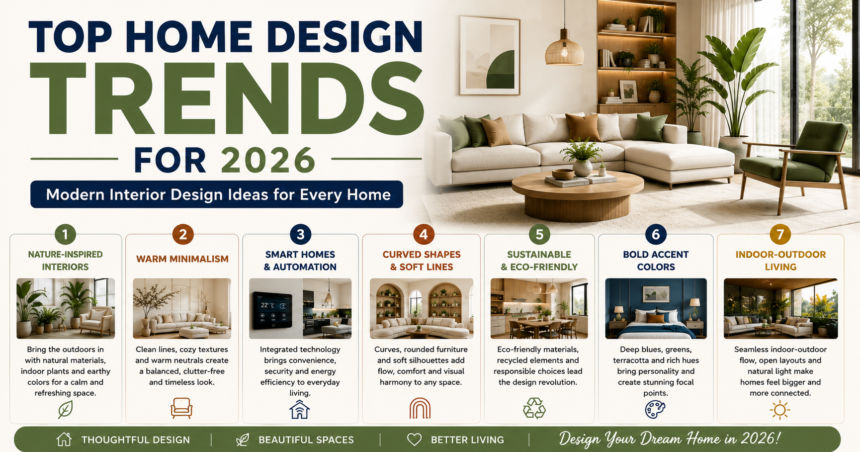
The Top Home Design Trends for 2026 are all about balance: warmth without clutter, technology without coldness, and luxury without waste. Homeowners are craving spaces that feel calm and personal, while architects and designers are leaning into natural materials, smart features, and flexible layouts that adapt to real life.
Whether you’re planning a full renovation, refreshing a single room, or simply gathering inspiration, this guide breaks down everything you need to know. We’ll explore the biggest design movements, the colors defining modern homes, common mistakes to avoid, and budget-friendly ways to bring these ideas to life.
Let’s take a closer look at what’s shaping our homes this year—and how you can make these trends work for you.
Why Home Design Is Evolving in 2026
Home design never stands still, but a few key forces are accelerating change this year.
First, how we use our homes has changed permanently. Remote and hybrid work mean our spaces need to pull double duty as offices, gyms, and gathering spots. People want rooms that flex with their routines instead of sitting empty.
Second, sustainability has moved from “nice to have” to non-negotiable. Homeowners increasingly want materials that are kinder to the planet—and to their health. Natural finishes and ethically sourced products are now central to good design, not an afterthought.
Third, wellness is driving décor decisions. After years of busy, screen-heavy living, people want homes that feel restful. That’s fueling the rise of spa-like bathrooms, biophilic touches, and soft, soothing color palettes.
Finally, technology has matured. Smart home features are no longer clunky add-ons; they blend seamlessly into the background, making daily life easier without dominating a room’s look.
Together, these shifts explain why 2026 feels less about flashy statements and more about intentional, livable beauty.
Top Home Design Trends for 2026
Here are the standout movements shaping interiors this year, with practical inspiration for each.
Sustainable and Eco-Friendly Materials
Sustainability is the foundation of the Top Home Design Trends for 2026. Designers are turning to natural stone, aged brass, reclaimed wood, organic linen, and clay-based finishes—materials that look beautiful and tread lightly on the planet.
What makes this trend special is that eco-friendly now reads as luxurious. A reclaimed timber dining table or a handmade tile backsplash brings character that mass-produced pieces simply can’t match.
Try this at home:
- Choose furniture made from FSC-certified or reclaimed wood.
- Swap synthetic textiles for organic cotton, linen, or wool.
- Look for low-VOC paints to improve indoor air quality.
Smart Home Integration
Smart home design in 2026 is all about subtlety. Instead of gadgets that shout for attention, the focus is on seamless integration—lighting, climate, security, and entertainment that respond to you without visual clutter.
Discreet built-in panels, voice control, and energy-monitoring systems are becoming standard, especially as homeowners look to cut energy bills and boost efficiency.
Try this at home:
- Start small with smart bulbs and a central hub before expanding.
- Prioritize systems that improve energy efficiency, like smart thermostats.
- Hide tech behind cabinetry or recessed fixtures for a clean look.
Warm Minimalist Interiors
Cold, stark minimalism is officially out. In its place is warm minimalism—a pared-back look softened by cozy textures and inviting tones. Think warm whites, creams, beige, taupe, and tan layered with natural wood and tactile fabrics.
The result is a space that feels uncluttered yet welcoming, calm yet full of personality.
Try this at home:
- Stick to a tight, warm-neutral palette.
- Add depth with texture: bouclé, linen, rattan, and stone.
- Keep surfaces clear, but let a few meaningful objects shine.
Multifunctional Living Spaces
With homes working harder than ever, multifunctional living spaces are a defining trend. A guest room that doubles as a home office, a kitchen island that serves as a workstation, or a living room with a hidden murphy bed—flexibility is everything.
Try this at home:
- Invest in convertible furniture, like extendable tables and sofa beds.
- Use room dividers or shelving to zone open-plan areas.
- Choose storage that does double duty, such as ottomans with hidden compartments.
Nature-Inspired Design Elements
Biophilic design continues to flourish in 2026. Bringing the outdoors in—through plants, natural light, and organic materials—helps create a sense of calm and connection.
Expect to see large windows, indoor greenery, stone accents, and nature-inspired patterns that soften modern interiors.
Try this at home:
- Add a mix of low-maintenance houseplants throughout your home.
- Maximize natural light with sheer curtains and mirrors.
- Incorporate natural textures like jute rugs or stone countertops.
Earth-Tone Color Palettes
Color is going grounded and earthy. Warm neutrals, terracotta, olive green, sand, and rich browns dominate 2026 palettes, often paired with soft accent shades for depth.
These tones complement the warm minimalist and nature-inspired trends beautifully, creating cohesive, soothing spaces.
Try this at home:
- Use earth tones on walls for a warm, enveloping feel.
- Layer multiple shades within the same family for richness.
- Add a single bold accent—like reddened earth or muted lemon—for interest.
Statement Lighting Fixtures
Lighting is having a moment, but with a softer touch. Sculptural, statement fixtures still feature heavily, though 2026’s versions lean toward organic shapes and diffused, ambient glow rather than harsh brightness.
A beautiful pendant or sculptural floor lamp can act as functional art, anchoring a room while setting the mood.
Try this at home:
- Choose one sculptural fixture as a focal point per room.
- Layer lighting with overhead, task, and accent sources.
- Opt for warm, dimmable bulbs to create flexible ambiance.
Curved Furniture and Organic Shapes
Sharp edges are softening. Curved furniture and organic shapes—rounded sofas, kidney-shaped coffee tables, arched mirrors, and flowing silhouettes—are everywhere in 2026.
These shapes feel inviting and relaxed, adding a sense of movement and comfort to any room.
Try this at home:
- Anchor a living room with a curved sofa or armchair.
- Add arched mirrors or rounded décor for soft contrast.
- Balance curves with a few structured pieces to avoid visual chaos.
Luxury Kitchen Designs
Kitchens in 2026 are shifting away from sterile, ultra-modern looks toward warmth and comfort. Luxury now means natural materials, discreet built-in appliances, rich textures, and thoughtful details that make cooking and gathering a pleasure.
Try this at home:
- Choose integrated, panel-ready appliances for a seamless look.
- Mix materials—stone, wood, and matte metals—for depth.
- Add warmth with under-cabinet lighting and natural finishes.
Spa-Like Bathroom Concepts
The bathroom is becoming a personal retreat. Spa-like bathrooms feature soothing palettes, natural stone, rainfall showers, freestanding tubs, and warm, layered lighting that turns daily routines into rituals.
Try this at home:
- Introduce natural stone or wood-look tile.
- Add greenery and soft textiles for a serene feel.
- Upgrade fixtures with a rainfall showerhead or heated floors.
Best Colors for Modern Homes in 2026
Color sets the tone for every space, and 2026’s palette is warm, grounded, and versatile. Here are the shades leading the way:
- Warm neutrals: Creamy whites, beige, taupe, and khaki form the foundation of most modern interiors.
- Earthy greens: Olive, sage, and muted forest tones bring a calming, natural feel.
- Terracotta and clay: Warm, earthy reds add coziness and depth.
- Soft blues: Moody, muted blues create a serene, sophisticated mood.
- Rich browns: Cordovan and chocolate tones add warmth and contrast.
- Subtle accents: Soft yellows and silvery grays work beautifully as highlights.
The key is to build a layered palette: choose a warm neutral base, add one or two earthy tones, and finish with a single accent color for personality.
Home Design Mistakes to Avoid
Even the best ideas can fall flat without careful planning. Steer clear of these common pitfalls:
- Following trends blindly. Just because something is popular doesn’t mean it suits your home or lifestyle. Choose what genuinely works for you.
- Skipping the plan. Many costly mistakes come from poor planning. Map out layout, budget, and materials before work begins—then stick to it.
- Over-cluttering. Warm minimalism is about balance, not piling on accessories. Leave room to breathe.
- Ignoring lighting. Relying on a single overhead light flattens a space. Layer your lighting instead.
- Forgetting scale. Furniture that’s too big or too small throws off a room. Measure carefully before buying.
- Sacrificing comfort for looks. A beautiful chair you can’t sit in isn’t worth it. Prioritize livability.
Budget-Friendly Ways to Update Your Home
You don’t need a full renovation to bring the Top Home Design Trends for 2026 into your space. Small, intentional changes can have a big impact:
- Repaint a room in a warm, earthy tone for an instant refresh.
- Swap out hardware on cabinets and doors for an updated feel.
- Add greenery with affordable houseplants to bring in a biophilic touch.
- Update textiles—cushions, throws, and rugs in natural fabrics—for cozy texture.
- Upgrade lighting with a statement fixture or warm, dimmable bulbs.
- Rearrange furniture to improve flow and create multifunctional zones.
- Add a backsplash or peel-and-stick tile for a quick kitchen or bathroom lift.
These updates are visually impactful, easy to complete, and friendly on the wallet—proof that good design doesn’t have to break the bank.
Traditional vs. Modern Home Design Trends
Understanding the differences between traditional and modern design can help you decide what suits your space. Here’s a quick comparison:
| Feature | Traditional Design | Modern Design (2026) |
| Color palette | Warm, rich, deep earthy tones | Warm neutrals with earthy accents |
| Materials | Ornate wood, heavy fabrics | Natural stone, reclaimed wood, organic linen |
| Layout | Defined, separate rooms | Open-plan, multifunctional spaces |
| Furniture | Detailed, structured, classic | Curved, organic, comfortable |
| Lighting | Ornate chandeliers, fixtures | Sculptural, ambient, diffused |
| Technology | Minimal or hidden | Seamlessly integrated smart features |
| Overall feel | Formal and timeless | Calm, warm, and effortless |
Many homeowners today blend both styles—pairing classic warmth with modern simplicity—to create spaces that feel personal and enduring.
Future of Home Design Beyond 2026
So where is home design heading next? The trends taking root this year point to a few lasting directions.
Sustainability will only deepen. Expect even greater demand for circular design, recycled materials, and energy-positive homes that give back to the grid.
Technology will grow more invisible. Smart features will continue to fade into the background, anticipating needs rather than waiting for commands.
Wellness-focused design will expand. Air quality, natural light, acoustics, and biophilic elements will become standard considerations, not luxuries.
Personalization will rule. As mass-produced looks fade, people will favor custom, handcrafted, and meaningful pieces that tell their own story.
In short, the future of home design is warmer, smarter, and more human—building on everything that makes 2026 so exciting.
Frequently Asked Questions
1. What is the biggest home design trend for 2026?
Warm minimalism leads the pack—pared-back interiors softened with cozy textures, natural materials, and warm neutral tones. It balances simplicity with comfort, making it one of the most loved looks this year.
2. What colors are popular in 2026 home design?
Warm neutrals like cream, beige, and taupe dominate, paired with earthy greens, terracotta, rich browns, and muted blues. Soft accent shades add personality without overwhelming a space.
3. Are smart homes still trending in 2026?
Yes, but the focus has shifted to seamless integration. Smart features now blend invisibly into the home, improving comfort and energy efficiency without visible clutter.
4. How can I update my home on a budget?
Repaint with an earthy tone, swap hardware, add plants, refresh textiles, and upgrade lighting. These small changes deliver a big visual impact without a major investment.
5. Is minimalism still in style for 2026?
Absolutely—but it’s warmer now. Cold, stark minimalism has given way to warm minimalism, which keeps clean lines while adding texture, warmth, and a sense of home.
6. What materials are trending in 2026 interiors?
Natural and sustainable materials lead the way: natural stone, reclaimed wood, aged brass, organic linen, and clay-based finishes that feel both luxurious and eco-conscious.
7. Should I choose traditional or modern design?
It depends on your taste and lifestyle. Many homeowners blend the two—pairing traditional warmth with modern simplicity—for a space that feels both timeless and current.
Final Thoughts
The Top Home Design Trends for 2026 share a common thread: they’re designed for real life. From sustainable materials and smart integration to warm minimalist interiors and spa-like bathrooms, this year’s looks prioritize comfort, wellness, and intention over flash.
You don’t have to overhaul your entire home to enjoy these ideas. Start with one room, one color, or one thoughtful upgrade, and build from there. Whether you’re an interior designer planning a client project, an architect shaping new spaces, or a homeowner refreshing your surroundings, there’s never been a better time to create a home that truly reflects how you want to live.
Pick the trend that speaks to you most, and take that first step toward a warmer, smarter, and more beautiful home this year.
Also, read this page: Top Home Design Trends That Will Dominate 2026